Estrangement: Is it the Right Choice for Me?
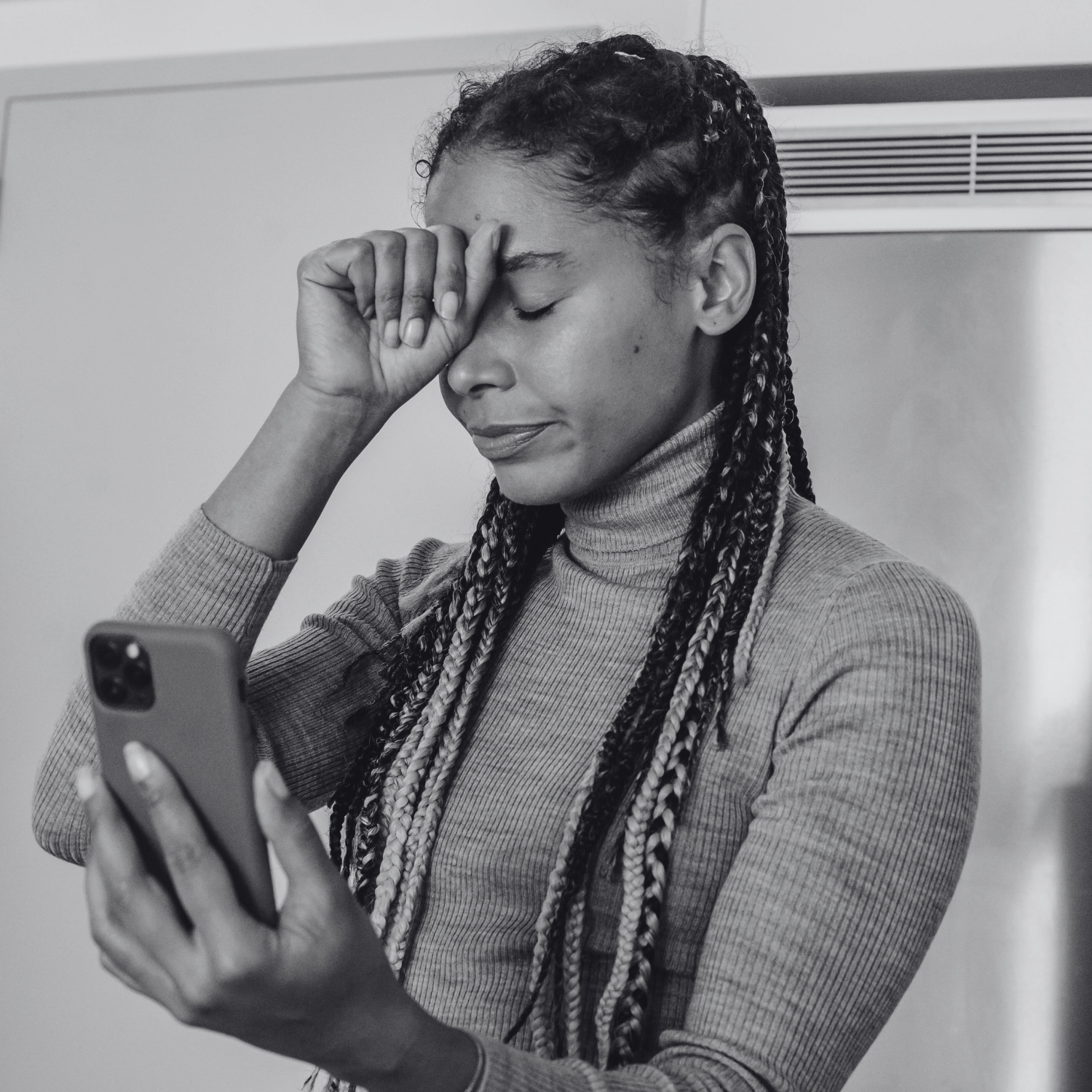
Estrangement is hard and complicated–and it’s something we rarely talk about.
It takes a lot for a relationship to get to the point where cutting off all contact, or becoming estranged from one another, is actually the best call. Most of us don’t want to get there; humans are social creatures and our relationships are what sustain us. But sometimes, a relationship is no longer a sustaining force in your life–and when you feel you’ve exhausted all of your options for repair, estrangement can be the only way to protect yourself.
This is never an easy call to make. For some folks, estrangement is a lifelong status within their relationship, for others it’s a temporary state the relationship has to take before everyone is ready to take accountability for how they show up, and do the active work of repair. Some folks hope estrangement will only be temporary, and find that the other person is never able to meet them where they deserve. Some folks believe that their estranged relationship will last forever, only to be surprised later on in life by a willingness from themselves and the other person, to give the work another chance.
It’s messy and painful and often full of a type of grief that never really goes away–especially if the relationship in question is a foundational one, like one with a parent who is never able to show up as you need them.
If you’re not sure if being fully estranged in this relationship is right for you, that’s okay. You don’t have to make a forever decision right now. Take time to think about how this relationship shows up in your life–what it asks of you, how it supports you, or the lack of safety and support you feel in it. If you’re hopeful that the other person within the relationship could still show up for you and work on repairing your dynamic, pulling back from rather than cutting out the relationship might feel better for you.
If you’re considering whether or not becoming estranged from someone is the right choice for you, here are some things to consider:
Desire vs compulsion to hold the relationship together:
The first thing to consider is: why do you want to stay in this relationship? Do you feel a genuine desire to stay, or do you feel responsible for “fixing” it, or for someone else’s feelings? There are rough times in many relationships, and if everyone in the relationship wants to work on those issues together, it is possible to move through them. But, if a relationship is one sided, or only one person is willing to do the hard & vulnerable work of being in a relationship, then sometimes ending the relationship–whether through cutting off contact altogether or not–is actually the healthiest option.
There are a lot of reasons we find ourselves compelled to stay in relationships that not only aren’t functioning, but are possibly hurting us. Some of these reasons can be:
Family values/expectations that reinforce the idea that family is above all else, that you must forgive them for anything, simply because they’re family
Sunk cost fallacy: the idea that the time you’ve spent in the relationship will have been a waste if you end it now
Practicality/logistics: you may share a space to live, or be navigating co-parenting, or other practical logistics that make ending a relationship and reducing or cutting off contact difficult
Fear of change: huge life changes bring the unknown, which can be scary. Not just ending a relationship, but removing it from your life can activate this feeling, because it’s not something many of us have practice in–even if it’s the right choice for us.
Continuing love: it’s possible to love someone even when the relationship is no longer good or working–and this love can make it hard to decide when it’s finally time to let go.
What can realistically change?
Can the issues in this relationship be worked on? Are both people in the relationship able to own up to the harm they have caused, take responsibility for their actions & prioritize accountability for how they show up in the relationship going forward?
For some relationships, the answer is a clean yes or no. For others, it might be messier. Folks might believe that they are taking responsibility for how they behave, without actually changing their behavior. Some folks might be able to accept their own wrongdoing without being able to apologize for it, and some might not be able to accept how they’ve contributed to an unhealthy dynamic at all.
Deciding what you are able and willing to tolerate depends on how well you’re able to regulate and process your own emotions, how able you are to separate your sense of self from the relationship in question, the types of support you have in place outside of the relationship (therapy, coping skills, other relationships where you can be emotionally vulnerable, etc.), and how well the person in the relationship in question is able to meet you where you need them to be.
It’s important to remember that no matter how much any of us may deserve an apology or accountability from someone who has hurt us repeatedly, we can’t control whether they’re able to do the work that allows them to give it to us. Biding time in a relationship with the hope that you’ll get the behavior or apology you deserve only puts you at risk for more mistreatment. While it may feel painful in the moment–any for many moments after–estrangement may be the only way to protect yourself from staying in a toxic situation, until (if ever) the person in question is able to do the work to meet you where you need to be.
Where do you want to go from here?
If full estrangement is the path you’re taking, remember you still need to take time to figure out what that looks like for you. How will you manage relationships that connect you to the person and relationship you’re estranged from? What will your boundaries be regarding seeing this person, alone or in group settings? How much contact would you like to have with them, if any? Are there specific situations where you have to continue to see them? What would make you feel safe and protected in those situations?
Whether your boundaries include always having another person around or never being in the same room as the person you’re estranged from, they are up to you to define, communicate and enforce. While we hope any communicated boundaries would be respected, in an already toxic relationship, the other person may be unpredictable or may disregard or disrespect attempted boundaries.
Just as you can’t control if someone is able to meet you where you deserve, you also can’t control whether or not someone sticks to the boundaries you’ve laid out for them. That’s why having a plan for how you’d like to navigate violated boundaries, and getting clear on your support system is crucial.
How will you stay regulated?
Whether you think full on estrangement or just reduced contact with the person in question is right for you, you’ll need a strong support system and a robust set of coping mechanisms to help you navigate all of the complicated feelings and experiences that come with estrangement.
Estrangement brings with it grief; sometimes it’s grief over not being able to have the relationship you wanted or deserved, grief over not being able to have the repair you desire, grief at life milestones or holidays when all those feelings get brought back up again. There can often be a mix of anger, guilt, regret, shame–all difficult uncomfortable feelings that we struggle to decipher and navigate on our own. A strong support system can help with this, and can include:
Working with a therapist who can help you identify when these feelings are activated in you, and healthy ways for you to work through them
A larger network of supportive relationships who you can call on to share your vulnerable feelings & thoughts with, and who can show up for you when you need someone
Coping skills to help you work on noticing and regulating your emotions as they come up (a therapist can help you work on finding the most effective ones for you)
How do you want to show up for yourself?
When dealing with relationships where estrangement is on the table, it can be hard not to fall into old patterns and abandon yourself without even realizing it. While there’s no hard and fast rule for when estrangement is the healthiest option, there are signs of self abandonment that should be heeded. These can be things like never resolving conflicts, because you’re too worried about how the other person will react, or never expressing how you feel, because you fear having to defend your right to feel those things at all.
While some relationships can go through ebbs and flows where one person is taking the lead more than others, the health of the relationship should never come at the expense of the health of one of the people in it. When you find yourself feeling stuck in that place–where you have to give up more and more without feeling supported or cared for in return–it may be time to consider what the relationship is costing you vs. what it is providing in your life.
The important thing is to listen to yourself–your true needs, not the needs you feel you’re responsible for maintaining for others, and remember it will take a lot of work and time for you to be able to distinguish between those two. Sometimes, this work can be done more effectively when you’re estranged from someone who can’t take responsibility for their role in your relationship with them, and sometimes this work can be done while working on repairing these types of relationships.
If you’re navigating a relationship where you feel estrangement may be your best option, reach out to one of our therapists today.
BLOG AUTHORS ALL HOLD POSITIONS AT THE GENDER & SEXUALITY THERAPY CENTER (G&STC). FOR MORE INFORMATION ABOUT OUR THERAPISTS AND SERVICES PLEASE CONTACT US.